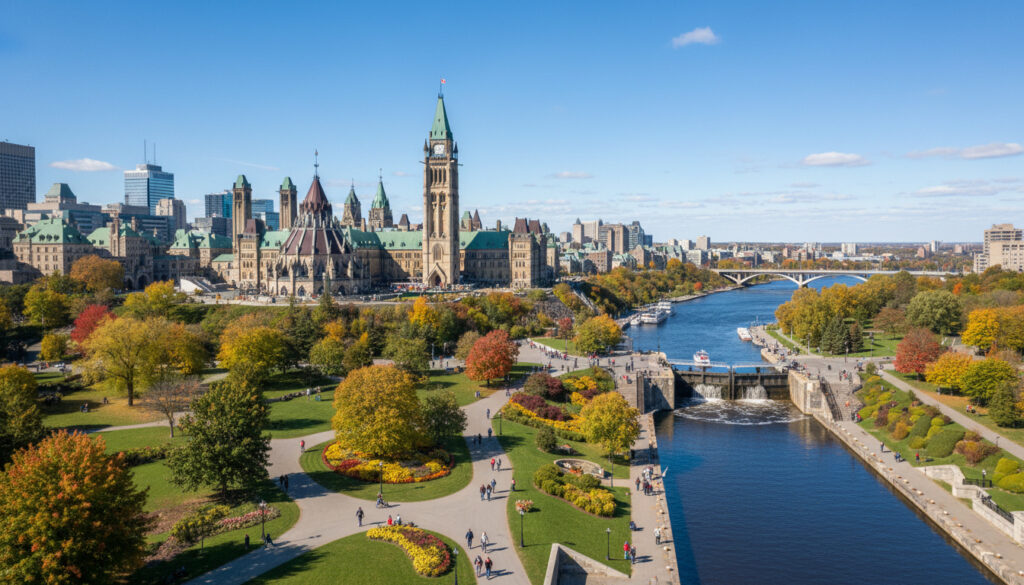
Things to Do Ottawa – Top Attractions and Free Activities
Ottawa serves as Canada’s capital, offering a compact urban core where Gothic Revival architecture meets UNESCO-protected waterways. The metropolitan area supports over one million residents, yet visitors find the downtown district densely packed with national institutions, pedestrian pathways, and seasonal festivals.
The city centers on Parliament Hill, the Rideau Canal, and a concentration of federal museums, all within a two-kilometer radius. Tourism operators emphasize that 2025 accessibility upgrades continue to improve pedestrian flow between these landmarks, maintaining Ottawa’s reputation as a walkable destination suited to short itineraries.
Seasonal shifts transform the capital dramatically. Winter freezes the Rideau Canal into the world’s largest naturally frozen skating rink, while summer unlocks boating routes and outdoor performance series. This duality creates distinct visitor experiences depending on arrival dates.
What are the best things to do in Ottawa?
Parliament Hill
The neo-Gothic complex features the Peace Tower, Library of Parliament, and Centennial Flame. Free guided tours operate year-round, requiring advance booking through official channels.
Rideau Canal
This UNESCO World Heritage Site stretches 7.8 kilometers through downtown. Winter converts the waterway into a skating rink, while summer permits boating and paddling.
ByWard Market
One of Canada’s oldest public markets hosts fresh produce vendors, street performers, and nightlife. The district sits within one kilometer of Parliament Hill.
National Gallery of Canada
The glass-and-granite structure houses Canadian and Indigenous art collections. A large spider sculpture marks the exterior entrance.
Key Insights
- Parliament Hill offers free guided tours year-round, with the Changing of the Guard ceremony occurring on summer mornings.
- The Rideau Canal holds the record for the world’s largest naturally frozen skating rink, typically opening January through March.
- ByWard Market operates daily, combining food stalls with retail and entertainment venues.
- The Canadian Museum of Nature displays a complete blue whale skeleton within a castle-like heritage building.
- Gatineau Park, located across the Ottawa River, provides free hiking trails and swimming beaches accessible from downtown.
- Most major attractions sit within a 20-minute walk of each other along the Ottawa River pathway.
- The National Gallery features significant Indigenous art collections alongside international exhibitions.
| Feature | Details |
|---|---|
| Metropolitan Population | 1 million+ |
| Optimal Visit Duration | 2-3 days for highlights |
| Peak Season | May-September |
| Winter Highlight | Rideau Canal skating (7.8 km) |
| Core Walkability | High (under 1 km between major sites) |
| UNESCO Sites | Rideau Canal (2007) |
| Free Entry Attractions | Parliament Hill grounds, ByWard Market, canal pathways |
| Signature Architecture | Gothic Revival (Parliament) |
| Transit System | OC Transpo (bus and O-Train) |
| Cross-River Access | Walking bridges to Gatineau Park |
| Market Hours | Daily (ByWard) |
| Family Focus | Canadian Museum of Nature, War Museum |
What are some free things to do in Ottawa?
The capital emphasizes accessible public experiences. Visitors access Parliament Hill grounds without charge, observing the Centennial Flame and Gothic facades. During summer mornings, the Changing of the Guard ceremony proceeds on the lawn, featuring military bands and precision drilling.
Waterfront and Pathways
The Rideau Canal pathways remain open year-round for pedestrians and cyclists. In winter, skaters access the frozen canal free of charge, though equipment rental incurs fees. Summer visitors walk the 7.8-kilometer route or picnic along the banks.
Market and Public Spaces
ByWard Market operates as a public square where browsing costs nothing. Street performers populate the area during daylight hours. Nearby, Major’s Hill Park offers elevated views of Parliament Hill and the Ottawa River.
Natural Escapes
Gatineau Park lies across the Alexandra Bridge. The National Capital Commission maintains hiking trails, beaches, and waterfalls without entry fees. Tour operators note that the park provides 361 square kilometers of protected habitat accessible via public transit.
The Dominion Arboretum and Chaudière Falls viewing areas charge no admission. These sites provide panoramic river views away from the central tourist concentration.
Is Ottawa worth visiting and how long to stay?
How many days do you need in Ottawa?
Travel guides consistently recommend two to three days for a first visit covering the essential cluster of Parliament Hill, the National Gallery, and the Rideau Canal. Booking platforms indicate that this duration allows time for both downtown museums and a half-day excursion to Gatineau Park.
Is Ottawa a walkable city?
The downtown core facilitates pedestrian tourism. The distance from Parliament Hill to ByWard Market measures under one kilometer, with the National Gallery and Rideau Canal falling between these points. Travel publications confirm that visitors rarely require vehicles for central sightseeing.
How can I spend one day in Ottawa?
A single-day itinerary typically opens with a Parliament Hill tour and Changing of the Guard (seasonal), followed by lunch in ByWard Market. Afternoons accommodate the National Gallery or Canadian War Museum, with evening walks along the canal or riverfront.
Recent infrastructure improvements have enhanced wheelchair access along the Rideau Canal pathways and within Parliament Hill’s public grounds, though some historic buildings retain original stairways.
What is Ottawa best known for?
The city functions as Canada’s administrative capital, hosting the federal government, Supreme Court, and foreign diplomatic missions. This political significance manifests physically in the Parliament Buildings’ Gothic Revival spires, which dominate the skyline and appear on currency imagery.
Cultural Institutions
Ottawa maintains the highest concentration of national museums per capita in Canada. The Canadian Museum of Nature, Canadian War Museum, and National Gallery collectively house millions of artifacts and artworks. Destination Canada highlights these institutions as primary draws alongside the parliamentary precinct.
What food is Ottawa known for?
ByWard Market serves as the culinary epicenter, offering poutine, BeaverTails pastries, and multicultural street food. The market’s vendors supply fresh local produce alongside prepared meals. Airline travel guides mention the district’s concentration of Canadian specialties and international cuisines within pedestrian-friendly blocks. Discover the best free attractions and activities in Ottawa, Canada’s capital, with our comprehensive guide at Cirque du Soleil Montreal.
Outdoor food vendors in ByWard Market reduce operations during winter months. Indoor stalls and restaurants maintain year-round service, but alfresco dining peaks from May through September.
What should visitors prioritize by season?
- Spring (April-May): The Canadian Tulip Festival blankets Commissioner’s Park with over one million blooms, commemorating the Dutch gift of bulbs following World War II.
- Early Summer (June-July): Canada Day celebrations on July 1 transform Parliament Hill and downtown into venues for fireworks, concerts, and citizenship ceremonies.
- Late Summer (August): The Ottawa Tourism calendar lists IRONMAN Canada-Ottawa (August 3, 2025) and the BIG BANG Festival as major draws.
- Fall (September-October): Gatineau Park foliage tours attract photographers and hikers to view changing maple and oak colors across the escarpment.
- Winter (January-March): The Rideau Canal Skateway operates as the world’s longest naturally frozen rink, with rest huts and snack stands lining the 7.8-kilometer route.
What remains certain versus variable about Ottawa travel?
| Established Information | Uncertain or Conditional |
|---|---|
| Parliament Hill grounds remain open to the public without charge year-round. | Changing of the Guard ceremonies depend on weather and military schedules; cancellations occur without notice. |
| The Rideau Canal freezes reliably from January through March, allowing skating. | Exact opening and closing dates vary annually based on temperature fluctuations and ice thickness testing. |
| Major downtown museums operate fixed hours with consistent admission fees. | Parliamentary tour availability changes during parliamentary sessions or state visits, requiring advance verification. |
| Gatineau Park maintains free public access to trail networks. | Wildlife sightings and trail conditions vary seasonally; some paths close during spring melt or maintenance. |
What is the context of Ottawa within Canada’s capital region?
Ottawa occupies traditional Algonquin territory at the confluence of the Ottawa, Rideau, and Gatineau rivers. The city borders Gatineau, Quebec, creating a bilingual metropolitan area where French and English share official status. This geographic position places the capital at the intersection of Ontario and Quebec, distinct from larger commercial centers like Toronto or Montreal.
The National Capital Region encompasses federal lands administered separately from municipal governments. This arrangement preserves greenbelt areas and historic sites, including the agricultural research farms and the Prime Minister’s residence at 24 Sussex Drive. The region’s planning prioritizes viewsheds toward Parliament Hill, restricting high-rise construction that might obstruct sightlines to the Peace Tower.
Visitors often combine Ottawa with Quebec City or Montreal itineraries, though the capital warrants standalone attention for its concentration of national institutions. The TripAdvisor platform notes that first-time visitors frequently underestimate the depth of museum collections and the scale of Gatineau Park’s wilderness access.
What do travel authorities say about Ottawa?
Ottawa blends urban sophistication with immediate access to wilderness. The canal system and adjacent parkland create a rare capital environment where visitors transition from Gothic architecture to old-growth forest within minutes.
Destination Canada Official Guide
The compact downtown core allows travelers to walk from Parliament Hill to world-class museums, then cross a bridge into Quebec for hiking trails—all without renting a vehicle.
AAA TripCanvas
What is the essential summary for prospective visitors?
Ottawa delivers a high-density cultural experience suitable for two or three-day itineraries. The combination of free parliamentary tours, UNESCO-listed waterways, and accessible national museums creates value across budget levels. While winter demands cold-weather preparation for canal skating, summer offers festival programming and outdoor dining. The city’s walkable layout and bilingual character reflect its role as the political and cultural crossroads of Canada. Travelers seeking related provincial information might consult resources on the Child Support Calculator Ontario – 2025 Tables and Guidelines or cycling events like the Grand Prix Cycliste Quebec – Route, Results, History and 2025 Preview when planning extended Quebec-Ontario routes.
Frequently asked questions
What are the top attractions in Ottawa?
Parliament Hill, the Rideau Canal, ByWard Market, and the National Gallery of Canada constitute the primary attractions. The Canadian Museum of Nature and Canadian War Museum rank highly for history enthusiasts. All lie within downtown or immediate riverfront access.
What food is Ottawa known for?
ByWard Market serves as the culinary hub, specializing in poutine, BeaverTails pastries, and fresh local produce. The district hosts multicultural food stalls and established restaurants within pedestrian-friendly blocks near Parliament Hill.
What should I not miss in Ottawa?
First-time visitors should prioritize the Parliament Hill tour, skating or boating the Rideau Canal depending on season, and the National Gallery’s Indigenous art collections. The Changing of the Guard ceremony operates summer mornings only.
Is Ottawa expensive to visit?
The city offers extensive free activities including Parliament Hill grounds, canal pathways, ByWard Market browsing, and Gatineau Park access. Museum admissions and dining represent the primary expenses, though family packages and combo tickets reduce costs.
How do you get around Ottawa without a car?
The downtown core accommodates walking between all major attractions. OC Transpo provides bus and light rail service to outer districts and Gatineau Park trailheads. Bike rentals and e-scooters supplement summer mobility along the canal.
Are museums free in Ottawa?
While Parliament Hill and outdoor spaces charge no admission, national museums including the Canadian Museum of Nature and Canadian War Museum require paid entry. The National Gallery charges admission but offers free hours on Thursday evenings.
What is there to do near Parliament Hill?
ByWard Market sits one kilometer east, offering food and retail. The National Gallery lies southwest along Sussex Drive. The Rideau Canal runs parallel to the south, with walking paths connecting all three sites within fifteen minutes.
More related posts
 Sanctuary at Grand Memories Santa Maria: Guide & Reviews
 Is Corn a Vegetable? Botanical and Culinary Truth Explained
 Current Time in Nigeria: Exact WAT UTC+1 & Key Facts
 Foods High in Zinc: Best Sources, Deficiency Signs & Tips
 How to Get Rid of Bags Under Eyes: Fast Remedies & Treatments
 Is Ice Tea Good for You? Health Guide for Diabetes & Daily Use
 Alessandra Ambrosio: Age, Height, Net Worth, Children, Pregnancy
 The Three Musketeers: D’Artagnan (2023) – Cast, Plot, Part 2 Info
