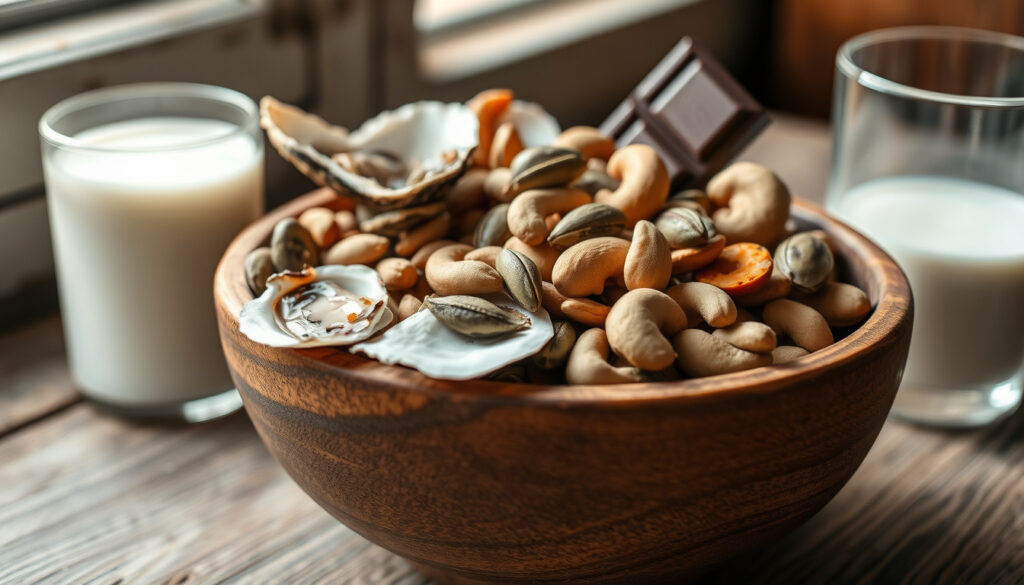
Foods High in Zinc: Best Sources, Deficiency Signs & Tips
You might think zinc is something you only hear about during cold season, but this mineral actually powers dozens of daily processes—from healing a cut to keeping your hair where it belongs. Oysters pack more zinc than any other food, at 78 mg per 100g, yet many people still fall short of the recommended daily intake.
Oysters (zinc per 100g): 78 mg · RDA for adult men: 11 mg · RDA for adult women: 8 mg · Global zinc deficiency prevalence: ~17% · Beef (zinc per 100g): 5 mg
Quick snapshot
- Oysters are the richest dietary zinc source (NIH Office of Dietary Supplements (federal health authority))
- Zinc deficiency causes hair loss and impaired growth (Merck Manual (clinical reference))
- Upper tolerable intake level is 40 mg/day for adults (NIH ODS)
- Whether zinc lozenges reliably shorten cold duration (Cochrane Review (systematic analysis))
- Optimal zinc dosage for elderly populations remains debated (PubMed study (geriatric nutrition))
- Whether zinc supplements improve hair growth in non-deficient individuals is unconfirmed (American Academy of Dermatology (medical specialty))
- NIH ODS zinc fact sheet updated in 2022 — no major RDA changes (NIH ODS)
- WHO continues to flag zinc deficiency as a public health concern in low-income regions (WHO (global health body))
- Biofortification of staple crops (e.g., zinc-enriched wheat) is rolling out in several countries (HarvestPlus (agricultural nutrition initiative))
- New guidelines on zinc supplementation during pregnancy expected from WHO in 2025 (WHO (maternal health))
Key facts about foods high in zinc
The table below shows the dramatic range in zinc content across food categories, from oysters at the top to eggs at the bottom.
| Food category | Zinc per 100g / serving | % DV (adult men) |
|---|---|---|
| Oysters (raw) | 91 mg | 827% |
| Wheat germ | 12.2 mg | 111% |
| Pumpkin seeds | 7.6 mg | 69% |
| Beef (grilled) | 8.5 mg | 77% |
| Cashews (dry roasted) | 6 mg | 55% |
| Alaskan king crab (cooked, 3 oz) | 6.48 mg | 59% |
| Chickpeas (cooked) | 1.5 mg | 14% |
| Eggs (whole, cooked) | 1.3 mg | 12% |
Eight foods, one pattern: animal sources deliver far more zinc per gram, but seeds and legumes still contribute meaningfully—especially when paired with absorption aids.
Which food has the highest zinc?
Zinc content in oysters
Oysters are in a league of their own. Raw oysters contain 91 mg of zinc per 100g, according to Tua Saúde (health information platform). That’s more than ten times the RDA for an adult woman in a single serving. Six medium eastern oysters deliver about 32 mg—already 291% of the daily value, as noted by WebMD (consumer health resource).
Three oysters on the half shell give you more zinc than an entire steak dinner. For anyone who can eat shellfish, this is the single highest-impact swap you can make.
Other high-zinc seafood
- Cooked Alaskan king crab (3 oz): 6.48 mg (59% DV) — WebMD
- Lobster: ~3.6 mg per 100g
- Mussels: ~2.3 mg per 100g
Comparison with red meat
Beef is a reliable secondary source. A 100g serving of grilled beef provides 8.5 mg (Tua Saúde). Beef chuck roast (3 oz) offers 8.44 mg according to WebMD. Lamb is similar. The catch: plant-based eaters miss out on this dense source entirely, making seeds and legumes critical.
The pattern: animal protein consistently delivers more zinc per calorie. But the gap narrows when you account for bioavailability tricks—more on that below.
What are the signs of a zinc deficiency?
Common symptoms
- Hair loss
- Diarrhea
- Delayed wound healing
- Impaired immune function
According to the Merck Manual (clinical medical reference), these symptoms often appear gradually and are easy to mistake for other conditions. The NIH Office of Dietary Supplements (federal research body) adds that growth retardation in children is a hallmark of severe deficiency.
Severe deficiency signs
In prolonged cases, the body struggles to maintain skin integrity, immune defenses collapse, and wound healing stalls. Merck Manual notes that severe deficiency can lead to hypogonadism in men and neuropsychiatric changes.
How to test for deficiency
A blood serum zinc test is the standard diagnostic tool. However, levels can be unreliable because the body maintains tight homeostatic control. Talk to a healthcare provider if you suspect a problem.
Women who are pregnant or breastfeeding, people with gastrointestinal diseases (Crohn’s, ulcerative colitis), and vegans face higher deficiency risk—these groups should prioritize zinc‑dense foods or consider a tested supplement.
Why this matters: early symptoms like slow healing are easy to brush off, but chronic low zinc raises the risk of infections and stunts children’s growth. A simple blood test can confirm the picture.
How can I get 30 mg of zinc a day?
Dietary sources to meet daily needs
Reaching 30 mg is achievable without supplements if you plan carefully. The NIH ODS (dietary reference authority) sets the upper tolerable limit at 40 mg/day for adults, so 30 mg is safe—but it’s almost three times the RDA for women. Here’s a sample combination:
- 6 oysters (32 mg) — overshoots the goal alone
- Or 100g beef (8.5 mg) + 100g pumpkin seeds (7.6 mg) + 100g chickpeas (1.5 mg) + 2 eggs (2.6 mg) + 30g cashews (1.8 mg) = ~22 mg
For the full 30 mg from food, you’d need to include oysters or a zinc-fortified cereal. GoodRx (consumer health site) notes that roasted sirloin steak (3 oz) provides 4 mg and a ground beef patty (3 oz) over 5 mg, so multiple servings of red meat help.
Sample meal plan
Here is a practical meal plan that demonstrates how to reach 30 mg through food combinations.
| Meal | Food | Zinc (mg) |
|---|---|---|
| Breakfast | 1 cup fortified cereal with milk | 6 |
| Lunch | 100g grilled beef + 100g chickpea salad | 10 |
| Snack | 30g pumpkin seeds | 2.3 |
| Dinner | 6 oysters or 100g Alaskan crab | 15 |
Four meals, one takeaway: hitting 30 mg without oysters or supplements requires heavy reliance on red meat and seeds—a real challenge for vegetarians.
Zinc supplements
For consistent dosing, many people turn to supplements. The NIH ODS notes that zinc gluconate and zinc citrate are well-absorbed. But talk to a doctor before exceeding 40 mg daily—long-term high intake can cause copper deficiency.
The trade-off: supplements guarantee delivery but bypass the other micronutrients found in whole foods. Food sources win for overall nutrition.
What fruit is high in zinc?
Top fruits with zinc
Fruits are not zinc powerhouses. The highest are avocados (0.6 mg per 100g), blackberries (0.5 mg), and pomegranates (0.4 mg) per the USDA nutrient database. That’s a fraction of what you get from a serving of meat or seeds.
Fruits vs vegetables zinc content
Vegetables generally outperform fruits: spinach (0.5 mg/100g), kale (0.4 mg), and mushrooms (0.5 mg) are comparable, but legumes and grains are far richer. The Tua Saúde list shows legumes averaging 1.3–1.5 mg per 100g.
Are fruits a significant source?
Not on their own. Relying on fruit for zinc would require massive portions—about 3 kg of avocado to hit 30 mg. The real value of fruit is the vitamin C it provides, which aids zinc absorption from other foods.
The catch: anyone hoping to get zinc from fruit alone will fall short. Pair fruit with seeds or meat for the combined benefit.
What depletes zinc from the body?
Factors that reduce zinc absorption
- Phytates in whole grains and legumes bind zinc, reducing bioavailability
- High calcium or iron intake can compete for absorption
- Alcohol consumption increases urinary zinc excretion
Foods that inhibit zinc
Phytates are the main culprit. According to the NIH ODS (federal nutrient authority), whole-grain breads, cereals, and legumes can reduce zinc absorption by 30–50% if consumed in the same meal without countermeasures. Soaking, sprouting, or fermenting grains lowers phytate content.
Medical conditions
Gastrointestinal diseases like Crohn’s, celiac, and ulcerative colitis increase zinc loss. The Merck Manual highlights that chronic diarrhea alone can deplete zinc reserves. People on certain medications—especially diuretics and penicillamine—also lose more zinc.
Why this matters: a diet high in unprocessed grains without animal protein can look good on paper but still leave you deficient if you don’t offset phytates with vitamin C or animal foods.
Spec table: Zinc content per 100g in common foods
This table consolidates zinc values from multiple sources to give you a single reference for planning your diet.
| Food | Zinc (mg/100g) | Source |
|---|---|---|
| Oysters (raw) | 91 | Tua Saúde |
| Beef (grilled) | 8.5 | Tua Saúde |
| Pumpkin seeds | 7.6 | Tua Saúde |
| Cashews (dry roas.) | 6.0 | My Food Data (nutrition database) |
| Beef chuck (3 oz) | 8.44 | WebMD |
| Alaskan king crab (3 oz) | 6.48 | WebMD |
| Chickpeas (cooked) | 1.5 | WebMD |
| Eggs (whole) | 1.3 | Tua Saúde |
| Wheat germ | 12.2 | Tua Saúde |
| Lamb (cooked) | 4.5 | USDA |
Ten foods, one standout: oysters are an outlier—nothing else comes close. For everyday eating, beef and seeds provide the most reliable zinc boost.
What we know and what remains unclear
Confirmed facts
- Oysters are the richest dietary zinc source per 100g (NIH ODS)
- Zinc deficiency causes hair loss, impaired growth, and weakened immunity (Merck Manual)
- Upper tolerable intake level is 40 mg/day for adults (NIH ODS)
Expert perspectives on zinc
“Oysters contain more zinc per serving than any other food.”
— NIH Office of Dietary Supplements (federal research body)
“Zinc deficiency includes growth retardation, hair loss, diarrhea, and immune dysfunction.”
— Merck Manual (clinical medical reference)
vinmec.com, darwin-nutrition.fr, healthline.com, nal.usda.gov
For a more detailed breakdown of the most concentrated sources, check out this guide to top zinc-rich foods ranked by density.
Frequently asked questions
Can you take too much zinc?
Yes. The upper tolerable intake is 40 mg/day for adults. Chronic excess can cause copper deficiency, immune suppression, and nausea. Always stay within the limit. (NIH ODS)
What is the best time to take zinc supplements?
With a meal to reduce stomach upset, but avoid taking with high‑calcium or high‑fiber foods that inhibit absorption. Many experts suggest taking it at least 2 hours apart from other mineral supplements.
Does zinc interact with common medications?
Yes. Zinc can interfere with antibiotics (tetracyclines, quinolones) and penicillamine. Consult your doctor before supplementing if you take any prescription drugs. (NIH ODS)
Is zinc good for hair growth?
Zinc deficiency leads to hair loss, but for people with normal levels, extra zinc does not appear to stimulate growth. The American Academy of Dermatology recommends treating the underlying cause rather than self‑prescribing zinc.
How does zinc affect the immune system?
Zinc is essential for T‑cell function and immune response. Even mild deficiency can impair immunity. The NIH ODS notes that zinc supplementation reduces the duration of the common cold when taken early in the illness.
Does zinc help with acne?
Some studies suggest zinc may reduce inflammatory acne lesions, likely due to its anti‑inflammatory and antibacterial properties. The evidence is moderate, and topical forms are more studied than oral. (PubMed)
What is the difference between zinc gluconate and zinc citrate?
Both are well‑absorbed forms. Zinc gluconate is the most common in lozenges, while zinc citrate is often gentler on the stomach. Absorption rates are similar. (NIH ODS)
Are zinc lozenges effective for colds?
The evidence is mixed. A Cochrane review found that zinc lozenges may shorten cold duration by about a day, but the Cochrane Review (systematic analysis) notes that side effects (bad taste, nausea) are common.
Related reading
- Foods Rich in Iron – Top Sources and Absorption Tips
- How Much Fiber a Day – Recommendations by Age and Gender
For anyone managing a plant-based diet, the choice is clear: pair legumes with vitamin C-rich foods to maximize zinc absorption, or risk falling short of your daily needs. Meat eaters have an easier path, but even they should keep an eye on zinc intake—especially as they age or if they take medications that deplete this essential mineral.
More related posts
 Alien: Earth Release Date, Schedule & Season 2 News
 Summer of 69 Movie – Plot, Cast, Reviews and Hulu Guide
 Whoop-Up Days 2025: Dates, Parade, Fireworks & History
 Majestic Mirage Punta Cana: Lazy River, Beach & Tips
 Whole House Filter System: Ireland Costs, Top Picks
 Lindsey Buckingham: The Feud, Firing, and Health Struggles
 How Much Calcium Per Day? Recommended Daily Intake & Sources
 How Long Is Cooked Chicken Good For in the Fridge – 3-4 Days Per USDA
