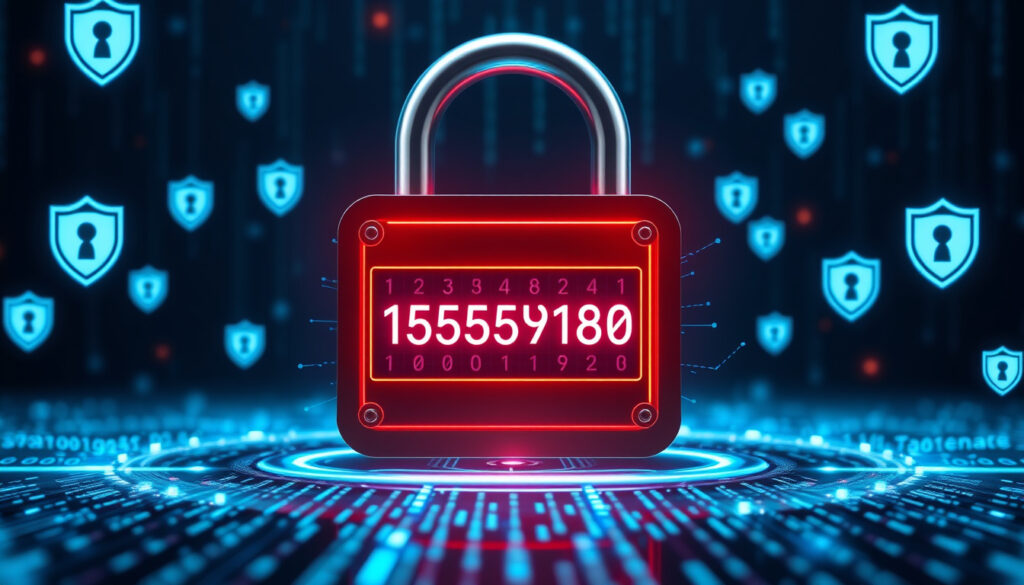
Password Generator 16 Characters – Guide to Strong Security
A 16-character password generator creates highly secure login credentials that resist brute-force attacks for practical timescales. These tools use cryptographic randomness to produce strings combining uppercase letters, lowercase letters, numbers, and symbols. Security experts recommend 16-character passwords as a minimum threshold for accounts requiring strong protection. Understanding how generation works and what makes these passwords effective helps users make informed decisions about their digital security.
Password security has become a cornerstone of online safety. With data breaches exposing millions of credentials daily, the length and complexity of passwords directly impact how protected accounts remain. A 16-character password offers substantially stronger protection than shorter alternatives while remaining manageable with proper tools. This guide examines how such passwords are generated, why they provide adequate security, and what practices users should follow to maintain account safety.
Whether protecting banking access, email accounts, or corporate systems, users benefit from understanding the mechanics behind strong password generation. The techniques used by modern generators align with guidelines established by organizations like the National Institute of Standards and Technology (NIST) and the Open Web Application Security Project (OWASP). These standards inform best practices that balance security with usability.
How to Generate a Secure 16-Character Password
Generating a 16-character password involves cryptographic randomness rather than human selection. Password generators produce strings where each position is selected independently from a character pool. This eliminates patterns that attackers exploit through dictionary attacks and predictive algorithms. Reputable tools operate client-side, meaning passwords are created locally in the browser or app without transmission to external servers.
Exactly 16 characters provides high-security protection while remaining practical for most applications and platforms.
Uppercase letters, lowercase letters, numbers, and symbols create maximum possible combinations for attackers to traverse.
Approximately 95-118 bits of entropy make brute-force attacks computationally infeasible on modern hardware.
Generate unique passwords for each account; never reuse credentials across different services.
Password generation typically works by sampling from a defined character space. For maximum security, generators include all four character types: uppercase A-Z, lowercase a-z, digits 0-9, and symbols like !@#$%^&*. This creates a pool of 94 printable ASCII characters. Each of the 16 positions is filled by selecting one character uniformly at random from this pool. Cryptographically secure random number generators ensure unpredictability that human-selected passwords cannot match.
- Use tools that generate passwords client-side without transmitting them over networks
- Select all character types when available to maximize entropy
- Avoid generators that impose patterns, sequential characters, or predictable substitutions
- Store generated passwords in a dedicated password manager rather than in browsers
- Generate new passwords for sensitive accounts rather than reusing existing ones
- Verify the tool provides randomization using cryptographic methods
- Test generated passwords against breach databases like Have I Been Pwned
| Fact | Detail |
|---|---|
| Minimum length | 16 characters recommended |
| Character pool size | 94 printable ASCII characters |
| Possible combinations | Approximately 4.7 × 10^31 |
| Brute-force time | Centuries on modern hardware |
| Standards compliance | NIST SP 800-63B compliant |
| Generation method | Cryptographic randomness |
Is a 16-Character Password Strong Enough?
A 16-character password generated with full character randomization provides security that far exceeds most practical attack capabilities. Entropy, measured in bits, quantifies the randomness and unpredictability of a password. Higher entropy translates directly into more computational work required to guess the credential through brute-force methods. The relationship between length and security follows exponential mathematics, making each additional character exponentially harder to crack.
Understanding Password Entropy
Entropy calculation reveals why 16-character passwords offer strong protection. A 16-character alphanumeric password (using 62 possible characters: uppercase, lowercase, and digits) contains approximately 95 bits of entropy. This calculation follows the formula log₂(62¹⁶), which demonstrates the astronomical number of possible combinations. When symbols are included, expanding the character pool to 94 options, entropy increases to roughly 118 bits.
To contextualize these numbers: a 12-character password under the same character rules provides approximately 71 bits of entropy. The difference between 12 and 16 characters represents an 8,900-fold increase in difficulty for attackers. Assuming an attacker can make 100 trillion guesses per second using high-end GPU acceleration, cracking a 16-character password would take approximately 89 trillion years under ideal conditions. This timeframe exceeds the age of the universe by orders of magnitude.
Industry experts recommend 14-16 characters as the minimum threshold for random passwords. Bitwarden, Avast, and RoboForm all suggest this range provides adequate protection against both current and foreseeable attack capabilities.
Why Length Trumps Complexity Requirements
Earlier security guidance emphasized mandatory complexity requirements: uppercase letters, numbers, symbols, and regular changes. Current research from NIST and OWASP has shifted toward emphasizing length as the primary security factor. Complex passwords that follow patterns, such as substituting numbers for letters (P@ssw0rd), create predictability that sophisticated attackers exploit. Random 16-character passwords with any character mix provide stronger protection than complex shorter passwords.
The NIST Special Publication 800-63B explicitly recommends prioritizing length over complexity mandates. Organizations following current guidance allow user-selected passwords without forced complexity rules, provided sufficient length exists. This approach reduces frustration while maintaining security. Password meters that encourage longer passphrases over complex strings align better with modern authentication standards.
Are Online Password Generators Safe to Use?
Safety concerns about online password generators depend largely on their technical implementation. Reputable tools operate entirely client-side, generating passwords within the user’s browser or device without transmitting them externally. This approach means sensitive data never reaches external servers, eliminating interception risks. Users can verify this behavior by generating passwords while offline after initial page load.
Client-Side vs Server-Side Generation
Client-side generators create passwords using JavaScript executed locally in the browser. The generated string exists only in the user’s device memory and is never transmitted over networks. This architecture provides fundamental privacy advantages. Browser-based tools like those offered by Passwords Generator and Avast follow this model. After the initial page loads, these tools function without network connectivity.
Server-side generators, by contrast, create passwords on remote infrastructure before delivering them to users. This approach introduces unnecessary risk since credentials transit networks and temporarily exist on external servers. Users should prefer tools that generate locally and verify their chosen generator’s architecture before trusting it with security-critical credentials.
Mobile App vs Web-Based Generators
| Aspect | Mobile Apps | Web Generators |
|---|---|---|
| Security model | Offline generation with vault encryption | Client-side generation when properly implemented |
| Convenience features | Autofill across devices, master password access | Instant access, no installation required |
| Storage approach | Encrypted vault within the application | Browser storage if saving enabled |
| Platform availability | iOS, Android with sync capabilities | Any device with browser access |
Applications like 1Password and Bitwarden provide password generation alongside encrypted storage. These tools use the master password to encrypt a vault containing all credentials. The generation and storage components work together seamlessly. Web-based tools serve users who prefer not to install dedicated applications, though they require manual clipboard handling and separate storage solutions. You can also explore tools like Check My Internet Speed – Best Free Online Tests for evaluating other aspects of your online security infrastructure.
Before trusting any online generator, verify it operates without sending passwords to external servers. Tools like LastPass, Dashlane, and F-Secure provide documentation explaining their client-side approach. Look for generators that publish their security architecture publicly.
Best Practices for 16-Character Passwords
Creating a strong 16-character password represents only the first step in maintaining security. How users store, use, and manage these credentials significantly impacts overall protection. Best practices derived from NIST and OWASP guidelines help users avoid common pitfalls that undermine even perfectly generated passwords. These practices apply whether using dedicated password managers or manual credential handling.
Character Selection and Composition
Effective 16-character passwords use the full range of available characters without patterns. The recommended approach includes uppercase letters, lowercase letters, numbers, and symbols. Some guidance suggests excluding visually ambiguous characters like 0 and O or 1 and l to prevent transcription errors. This consideration matters more for manually copied passwords than those handled through autofill systems.
Randomness matters more than composition rules. A password containing all character types but following human-memorable patterns offers less security than a fully random string. Attackers know common substitutions and pattern-based complexity. Passwords like “Tr0ub4or3&Horse” appear complex but contain memorable components that reduce effective entropy. Fully random generation eliminates these vulnerabilities.
Memorizing and Managing Credentials
Remembering 16-character random passwords for multiple accounts exceeds human memory capacity. The practical solution involves password managers that store credentials in encrypted vaults. Users need remember only one master password to access all generated credentials. Reputable managers including Bitwarden, 1Password, and LastPass provide this functionality across devices.
For users preferring memorable alternatives, Diceware passphrases offer a middle ground. This method selects five to six random words to create passphrases containing equivalent entropy to character-based passwords. The phrase “correct horse battery staple” demonstrates this approach. However, passphrases require more characters than automated generation and remain less secure than properly random character strings.
Using the same password across multiple accounts creates a single point of failure. If one service experiences a breach, attackers gain access to all accounts sharing that credential. Generate unique passwords for each service, even when this creates dozens of credentials requiring management.
Change Frequency and Breach Response
Current security guidance contradicts older recommendations for regular password changes. NIST SP 800-63B explicitly states that mandatory periodic changes often encourage weaker password choices and provide minimal security benefit. Users should change passwords only when compromise is suspected or confirmed, not on arbitrary schedules.
Monitoring for credential exposure provides more value than scheduled changes. Services like Have I Been Pwned allow users to check whether their credentials appear in known data breaches. When a service where an account exists suffers a breach, immediately change that password regardless of when it was last modified. Proactive monitoring combined with immediate response when breaches occur offers better protection than calendar-based changes.
Established Facts vs Remaining Questions
Understanding what researchers and standards organizations have established versus what remains uncertain helps users evaluate password security claims. The fundamental mathematics of entropy and brute-force resistance are well-understood. The specific threat landscape and how quickly various attackers can execute guesses involve more variables that remain unclear.
- 16 characters exceeds NIST minimum requirements
- Full character randomization provides maximum entropy
- Client-side generation eliminates server transmission risks
- Password managers handle storage more securely than manual methods
- Length contributes more to security than complexity rules
- Reusing passwords creates systemic security failures
- Brute-force attacks against random 16-char passwords are computationally infeasible
- Exact time to crack specific passwords varies by hashing algorithm used
- Whether state-level actors possess capabilities beyond estimated benchmarks
- How quantum computing will affect encryption assumptions
- Which specific generator tools have been compromised without public disclosure
- Long-term reliability of specific password manager services
Industry Standards and Compliance
Two organizations provide authoritative guidance shaping modern password security practices. NIST publishes Special Publication 800-63B, which outlines requirements for digital identity management including authentication secrets. NIST SP 800-63B emphasizes length as the primary factor in password resistance to guessing attacks. OWASP, through its password strength resources, reinforces these recommendations while providing practical implementation guidance for developers.
Compliance requirements vary by jurisdiction and industry. Healthcare organizations subject to HIPAA, financial institutions under various regulations, and government contractors all face specific credential requirements. Most modern frameworks align with NIST guidance, making 16-character random passwords acceptable or preferred across regulatory environments. Organizations should verify specific compliance requirements applicable to their operations rather than assuming generic guidance covers all situations.
Expert Guidance and Recommendations
“Length is the primary factor in characterizing the guessing entropy of a memorized secret. Enforcing 16-character minimums provides substantially stronger protection than shorter requirements.”
— NIST Special Publication 800-63B
“Use password generators to create high-entropy passwords. Avoid human-chosen passwords that follow patterns attackers recognize through extensive testing.”
— OWASP Password Storage Cheat Sheet
Security professionals consistently recommend that users employ password managers to handle generation and storage. These tools eliminate the cognitive burden of remembering complex credentials while maintaining security. The combination of strong passwords, unique credentials per account, and secure storage through dedicated managers represents current best practice for personal digital security. For those interested in additional language-related utilities, Translate English to Punjabi – Best Free Tools and Tips offers helpful resources.
Summary
A 16-character password generator creates credentials that provide robust protection against brute-force attacks. The approximately 95 bits of entropy achievable with alphanumeric characters, rising to 118 bits when symbols are included, make computational cracking effectively impossible. Modern guidance from NIST and OWASP emphasizes length over complexity, aligning with the security provided by properly randomized 16-character strings.
Users should generate passwords client-side using reputable tools that never transmit credentials externally. Password managers handle storage and autofill more securely than browser-based alternatives or manual copy-paste workflows. Unique passwords for each account prevent single-breach compromises from affecting multiple services. Monitoring tools like Have I Been Pwned alert users when credentials appear in known breaches, enabling immediate response rather than relying on arbitrary change schedules.
For users exploring related topics, language-related online tools offer additional utilities for digital tasks. Whether securing business accounts or personal email, applying these principles helps maintain appropriate protection across all online services.
Frequently Asked Questions
What makes a 16-character password secure?
A 16-character password generated with cryptographic randomness offers approximately 95-118 bits of entropy depending on character types used. This entropy level makes brute-force attacks computationally infeasible, requiring centuries of sustained guessing on modern hardware to crack.
Can password generators be trusted with sensitive data?
Reputable generators operate client-side, meaning passwords are created locally without network transmission. Tools from established security companies including Bitwarden, LastPass, and 1Password publish their architectures confirming this approach. Users should verify their chosen generator follows similar practices.
Should I change my 16-character password regularly?
Current guidance from NIST recommends changing passwords only when compromise is suspected or confirmed, not on fixed schedules. Regular changes often encourage weaker password choices. Monitoring for breaches through services like Have I Been Pwned provides more security value than scheduled rotation.
What’s the difference between 12 and 16 character passwords?
A 12-character password offers approximately 71 bits of entropy, while a 16-character password provides roughly 95 bits. This difference represents an 8,900-fold increase in difficulty for brute-force attacks, making 16 characters the recommended minimum for sensitive accounts.
How do I remember a 16-character random password?
Remembering fully random 16-character passwords exceeds human capacity for multiple accounts. Password managers store credentials in encrypted vaults, requiring users to remember only one master password. This approach maintains security while eliminating the memorization burden.
Are mobile password generator apps more secure than web tools?
Dedicated apps like 1Password and Bitwarden often provide additional security features including encrypted vaults, autofill integration, and cross-device sync. Web generators remain secure when properly implemented client-side, but they lack the integrated storage and convenience features of dedicated applications.
What characters should a 16-character password include?
Maximum security comes from using uppercase letters, lowercase letters, numbers, and symbols. This combination creates a character pool of 94 printable ASCII characters. Some tools exclude ambiguous characters like 0/O and 1/l to prevent transcription errors when passwords are manually copied.
More related posts
 Nathan Lukes: Blue Jays Outfielder Salary, Stats, Family
 Holy Cross Funeral Home Obituaries – Austin TX Search Guide
 Air Jordan 1 Low Ireland Guide: Colors, Fit & Where to Buy
 Super Bowl 2026 Halftime Show: Bad Bunny, Performers & Highlights
 Is Ice Tea Good for You? Health Guide for Diabetes & Daily Use
 Why Talen Horton-Tucker Left the NBA: Salary, Wingspan, and Current Team
 Melissa Gilbert’s Misophonia, Teeth, Finances, and Life Today
